

 Skip to content
 Selling a property in the UK comes with a fair share of paperwork, but few documents carry as much weight – or risk – as the TA6 Property Information Form. Designed to ensure full disclosure between seller and buyer, it’s a key part of the conveyancing process, setting out everything from boundaries and planning permissions to disputes and environmental issues.
One section in particular has become increasingly significant in recent years: Japanese knotweed. Sellers are required to state whether the property is affected by this highly invasive plant, whether it’s been treated, and whether it’s visible on or near the land.
Failing to complete this section accurately – even by accident – can lead to claims for misrepresentation, expensive legal action, and thousands of pounds in compensation.

As Environet’s own experience and recent research show, many homeowners are still unaware of the risks associated with Japanese knotweed or misunderstand their obligations when completing the TA6 form.
Environet Director, Mathew Day explains:
“Selling your home comes with enough challenges without risking legal trouble over Japanese knotweed. This invasive plant, if mishandled on the TA6 Property Information Form, can lead to costly consequences – even if you’re unaware it’s present.”
The TA6 Property Information Form is designed to give the buyer a complete and honest picture of the property. In relation to Japanese knotweed, it asks:
“Is the property affected by Japanese knotweed?”
The seller must then choose one of three options:
Once submitted, the TA6 form becomes a legally binding document. If a seller answers incorrectly – deliberately or otherwise – and knotweed is later discovered, the buyer may bring a claim for misrepresentation, which can lead to costly damages.
Despite the requirement to declare Japanese knotweed, a YouGov survey commissioned by Environet found nearly 1 in 10 sellers would knowingly hide knotweed issues, potentially affecting as many as 4,500 transactions every year. By answering incorrectly, or dishonestly, sellers are putting themselves at significant risk.
Misrepresentation claims can result in substantial compensation payouts. Buyers who later discover knotweed can claim not only for the cost of removal and treatment, but also for diminution in value (the amount by which the property’s value has fallen because of the knotweed) and legal fees.
Even unintentional errors can have serious consequences. Many homeowners believe that answering “No” is the safest or easiest route if they’ve never seen knotweed in their garden – but this can be a mistake.


Not disclosing can lead to legal action for misrepresentation, compensation claims for removal, devaluation and legal fees as well as delays or a sale falling through.
Once a buyer learns that the property has an undisclosed knotweed issue, they can claim that the seller misrepresented a material fact – a breach of the Misrepresentation Act 1967. This can result in the seller having to pay for treatment, losses in value, and professional costs.
In some cases, the buyer may even seek to rescind the contract, effectively undoing the sale. The stress, delay and cost of such disputes are considerable, and all are avoidable with proper disclosure and documentation.


“Declaring knotweed doesn’t mean you won’t sell, and treated properties often regain their ‘unaffected’ value when the knotweed is professionally removed and an insurance-backed guarantee is in place,” confirms Mat Day.
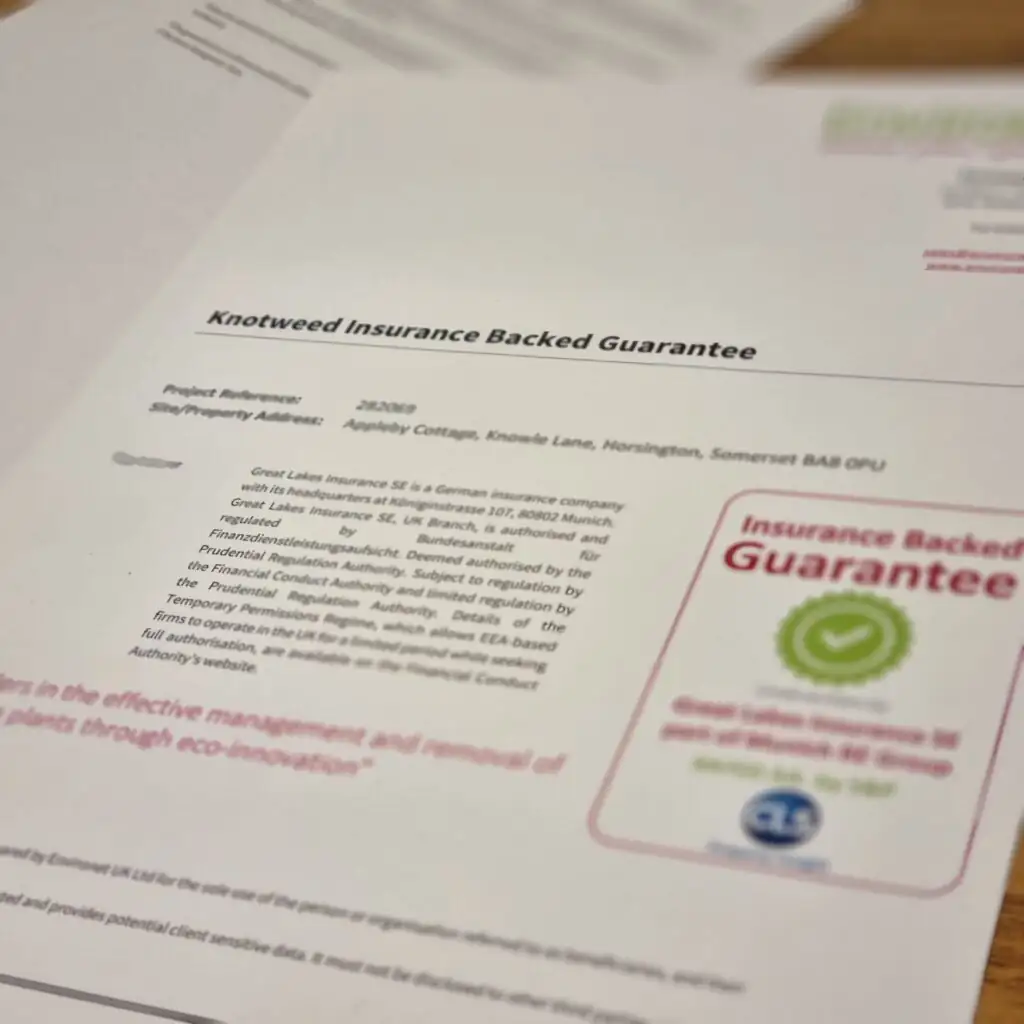
It’s a common misconception that disclosing Japanese knotweed will make a property unsellable. In reality, the market has become far more pragmatic. Buyers – and their lenders – are less concerned about properties with a history of knotweed, provided there is evidence of professional treatment and a valid insurance-backed guarantee (IBG).
At Environet, all treatment plans come with an IBG underwritten by an AA-rated insurer, which provides mortgage lenders with the reassurance they require. Once the knotweed is professionally managed, a property can often be restored to its pre-infestation market value.
67% of buyers would still purchase a property if the knotweed was treated or the property discounted. BUT – 33% wouldn’t proceed, which limits your buyer pool – so making sure you have the best management plan is really important to ensure that you don’t limit your chances of selling any further.
These figures highlight the growing awareness and realism among buyers. While some may still walk away from affected properties, most are willing to proceed if proper documentation and guarantees are provided. That’s why sellers should treat disclosure as a strategic advantage, not a liability. Being open and proactive builds trust and reassures buyers that the issue is under control.

The repercussions of mishandling the TA6 form can be long-lasting. Once knotweed is discovered after a sale, the buyer’s solicitor will immediately review the TA6 form to see how the question was answered. If the seller ticked “No,” but evidence later shows the plant was present or nearby, they are likely to face a claim for misrepresentation.
Even if the seller genuinely didn’t know, the courts have made it clear that carelessness is not a defence. The safest course is to answer “Not known” unless a qualified surveyor or contractor has confirmed the property is clear.
If you suspect Japanese knotweed, or even if you simply want certainty, arranging a professional survey is the best way to protect yourself. Environet offers detailed site inspections and treatment plans, supported by photographic evidence and mapping.
For homeowners who have confirmed infestations, treatment options include:
Once treatment is completed, Environet provides an insurance-backed guarantee accepted by mortgage lenders and recognised across the property industry.
This documentation can then be presented to buyers and their solicitors as part of the conveyancing process, demonstrating that the issue has been professionally resolved.


Since it’s almost impossible to be completely certain your property is knotweed-free, answering ‘Not known’ and seeking professional advice is often the safest course. This transparency protects both seller and buyer, leading to a smoother, hassle-free sale.
When in doubt, consult your Chartered Surveyor, Conveyancer or knotweed specialist for guidance.
In today’s property market, transparency and documentation are everything. Declaring the presence, or uncertainty of Japanese knotweed doesn’t necessarily make your property less attractive; failing to disclose it, on the other hand, can have devastating financial consequences.
The law is clear: honesty protects both parties. By seeking professional confirmation and answering the TA6 form accurately, sellers can avoid costly disputes and safeguard the sale process.
Need help completing your TA6 form or confirming your property’s knotweed status?
Contact Environet for expert identification, surveys and treatment plans backed by insurance guarantees recognised by mortgage lenders.

Rest assured, where invasive species are identified at an early stage and tackled correctly, problems can usually be avoided. Our specialist consultants complete thorough surveys to identify the extent of the problem. Our plans aren’t one-size-fits-all; they’re customised to tackle the invasive species at your property effectively, taking account of all of your requirements.
Our team of experts is available between 9am and 5:30pm, Monday to Friday to answer your enquiries and advise you on the next steps
Want a survey?
If you already know you have an invasive plant problem, you can request a survey online in less than two minutes by providing a few brief details. A member of the team will swiftly come back to you with further information and our availability.
Need quick plant identification?
Simply upload a few images of your problem plant to our identification form and one of our invasive plant experts will take a look and let you know, free of charge what you are dealing with. We’ll also be there to help with next steps where necessary.