

 Skip to content
 Removing Japanese knotweed yourself may seem tempting, especially after reading online “hacks” or watching videos promising quick results. But knotweed is unlike ordinary garden weeds – it is one of the UK’s most invasive, persistent plants – that can land you in hot water legally if it’s mishandled.
DIY attempts often:
Below, we explain why common DIY methods fail, and what you should do instead if you want the knotweed gone for good.

Online forums, social media videos and garden blogs often share “tips” for killing Japanese knotweed. But many of these approaches:
Even if the plant seems to “die back”, it is usually temporary. Knotweed almost always resurfaces – sometimes months, sometimes years later – often in new locations where fragments have been unknowingly moved.
And perhaps most importantly: DIY removal cannot produce the insurance-backed guarantee required by mortgage lenders.
Below are the methods we see most often. Each one is ineffective at best and damaging or illegal at worst.
Vinegar + coffee + washing-up liquid sprays
While vinegar is an effective weedkiller for small weeds – the acetic acid may scorch leaves, making them look wilted or “burned”, but when it comes to knotweed it:
Vinegar is great on chips, not on knotweed.
Many people pour diesel onto knotweed out of frustration.
This is problematic because:
Diesel is one of the worst DIY approaches we encounter.
Bleach is a powerful household cleaner — but:
Bleach may clean your bathroom, but it cannot kill knotweed.
Garden-centre herbicides like Roundup and Weedol often cause:
The underground rhizome remains alive, ready to re-emerge. Timing, dosage, formulation and application technique are critical – and shop products rarely provide enough strength or control.
Professionals use stronger formulations, specialist equipment and structured application schedules. DIY versions simply can’t match that standard.

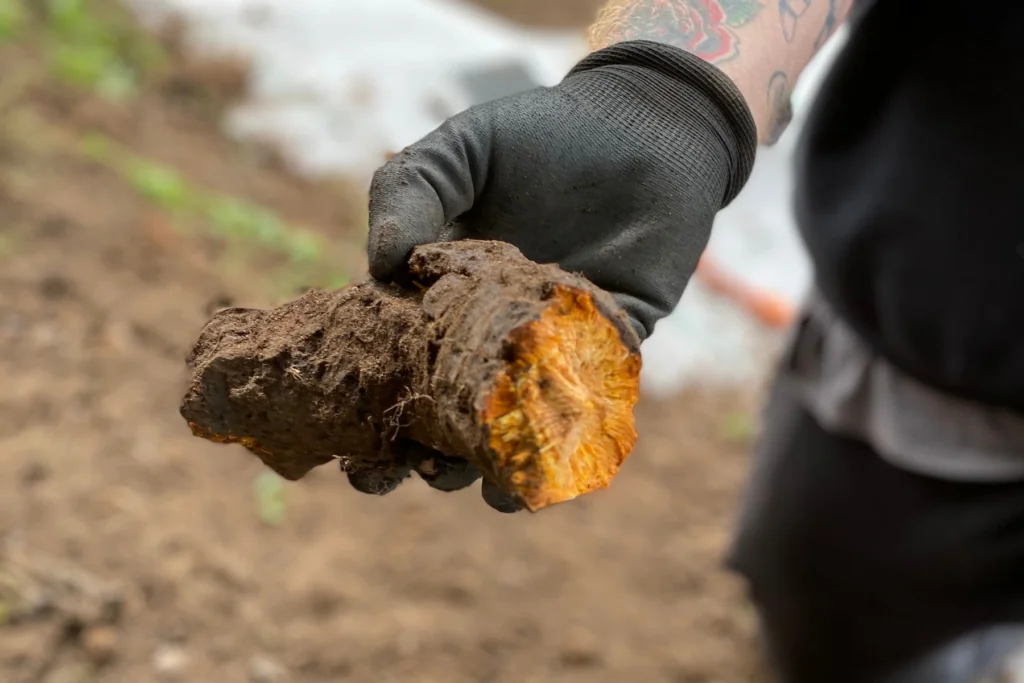
From 30 years of experience, the most common consequences of DIY removal are:
The plant appears gone – lenders, surveyors and buyers believe it’s gone – but the rhizome is still alive.
Strimming, digging or cutting can scatter rhizome fragments across the garden or into neighbour’s land.
Even if you “think” you’ve removed it, a buyer’s surveyor will still flag the historic issue – and they will need a professional guarantee.
Botched attempts force the plant underground, making professional removal harder and more time-consuming.
Moving knotweed-infested soil off site incorrectly breaches the Environmental Protection Act 1990.
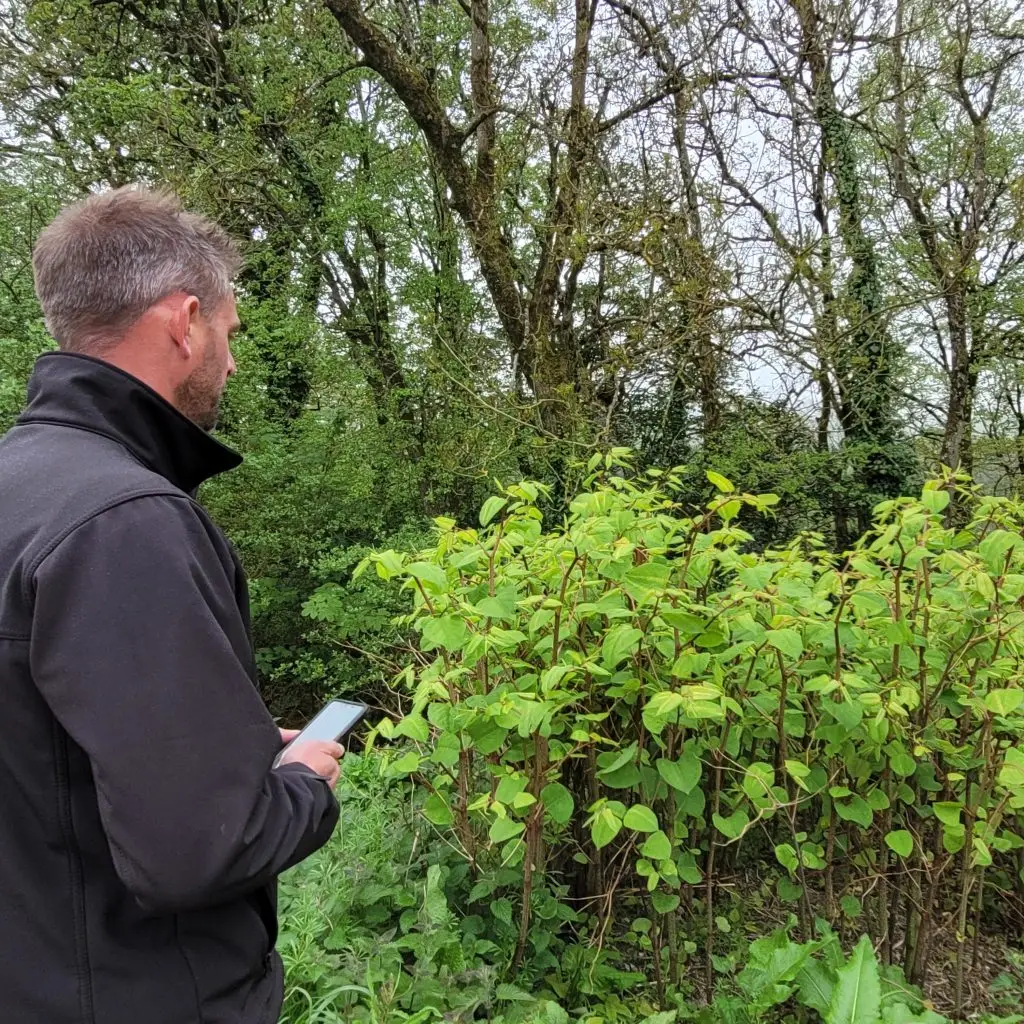
If you want to take action yourself, the safest DIY step is identification, not removal.
Start here: Identify knotweed
Once confirmed, you have two safe and effective options:
Herbicide treatment is suitable where the ground will not be disturbed.
Benefits:
Where you want the knotweed removed quickly or where DIY attempts have already complicated the situation, excavation is the best route.
Options include:
These methods provide the certainty required for house sales, building work, landscaping and lender approval.


Avoid DIY removal if:
In these situations, professional removal is the only reliable choice.
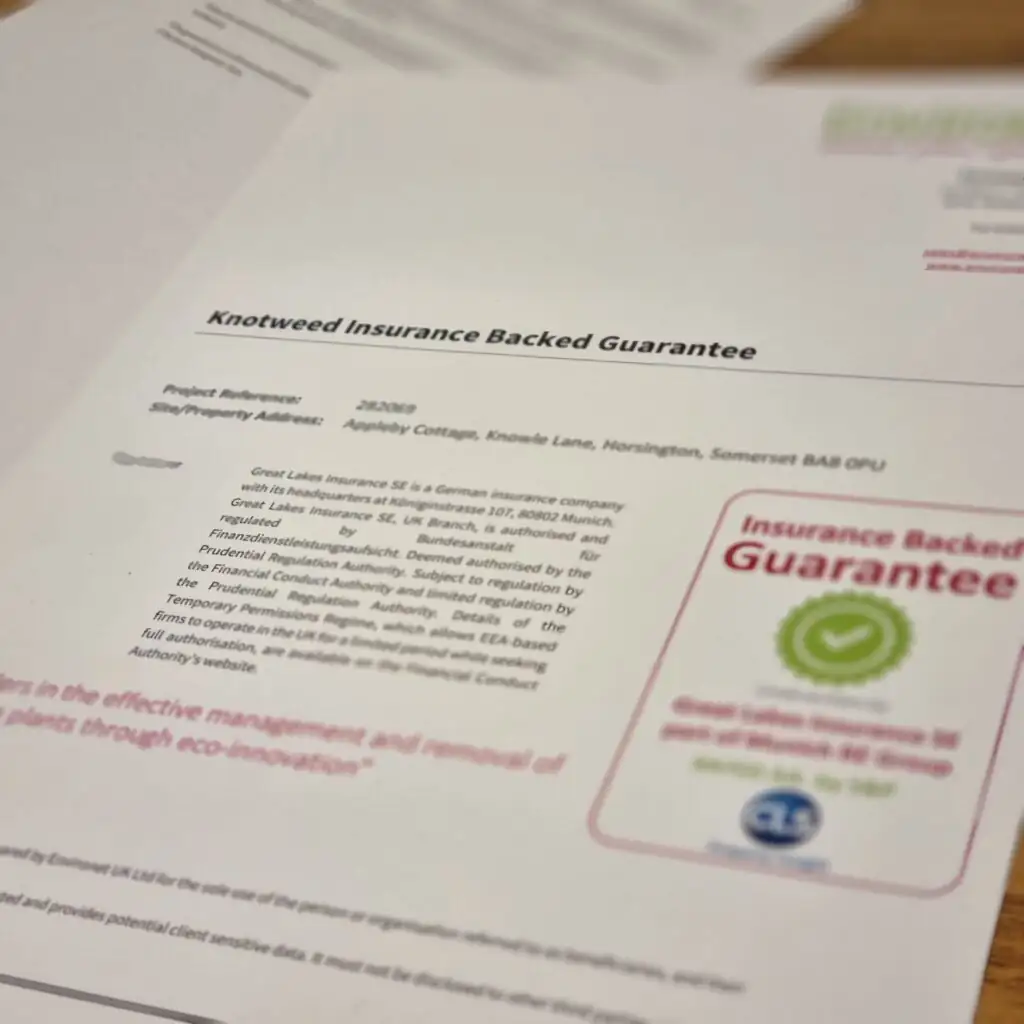
Mortgage lenders and surveyors generally require a professionally issued insurance-backed guarantee (IBG) after treatment or removal.
DIY attempts cannot offer this — which is why so many homeowners come to us after months or years of trying to fix the problem themselves.
Our team can advise on the quickest, safest and most cost-effective approach for your garden.
Request a survey.
We’ll assess the problem and propose a clear plan, with upfront costs and timescales.
Rest assured, where invasive species are identified at an early stage and tackled correctly, problems can usually be avoided. Our specialist consultants complete thorough surveys to identify the extent of the problem. Our plans aren’t one-size-fits-all; they’re customised to tackle the invasive species at your property effectively, taking account of all of your requirements.
Our team of experts is available between 9am and 5:30pm, Monday to Friday to answer your enquiries and advise you on the next steps
Want a survey?
If you already know you have an invasive plant problem, you can request a survey online in less than two minutes by providing a few brief details. A member of the team will swiftly come back to you with further information and our availability.
Need quick plant identification?
Simply upload a few images of your problem plant to our identification form and one of our invasive plant experts will take a look and let you know, free of charge what you are dealing with. We’ll also be there to help with next steps where necessary.