

 Skip to content
 For property managers, Japanese knotweed is rarely a one-off issue. It is an operational risk that can affect:
We are often instructed after a complaint has already escalated. A tenant reports growth near a boundary, a neighbouring owner alleges encroachment, or a contractor discovers knotweed during landscaping works.
In most cases, the difficulty is not the plant itself. It is the absence of a clear management record.

Across managed estates, common trigger points include:
Knotweed does not respect lease boundaries. Where estates include multiple demises, it is not always immediately clear who holds responsibility.
Property managers should establish early whether liability sits with:
Ambiguity increases exposure.
Private nuisance claims commonly arise where knotweed spreads across boundaries.
From an estate management perspective, the key question is not whether knotweed is visible. It is whether reasonable steps have been taken once it is known.
We commonly see disputes escalate where:
Documented management is critical in demonstrating reasonable conduct.


Routine grounds maintenance contractors are not always trained in invasive species management.
Typical issues include:
Once soil containing viable rhizome is disturbed, waste compliance obligations arise.
Property managers should ensure that invasive species protocols are embedded within maintenance contracts, particularly on large estates.
For asset managers overseeing multiple sites, Japanese knotweed should be considered within:
Early identification and structured management often reduces long-term cost.
Late discovery during refurbishment or redevelopment significantly increases programme risk.


Although Japanese knotweed itself is not typically an insured peril, disputes arising from encroachment or alleged negligence can have insurance implications.
Managing agents may also face reputational exposure where:
Transparent documentation and proportionate action reduce both litigation and reputational risk.
Property managers should implement a clear protocol where knotweed is suspected:
Ad hoc or verbal handling of complaints is where avoidable escalation often begins.


Where redevelopment, extension or major works are planned within a managed estate, knotweed risk should be reviewed before:
We are frequently instructed where knotweed was known on a managed estate but not factored into project planning, resulting in cost variation and delay.
We work with managing agents and asset managers across commercial and mixed-use portfolios, providing:
Our role is to provide structured control, not reactive treatment.

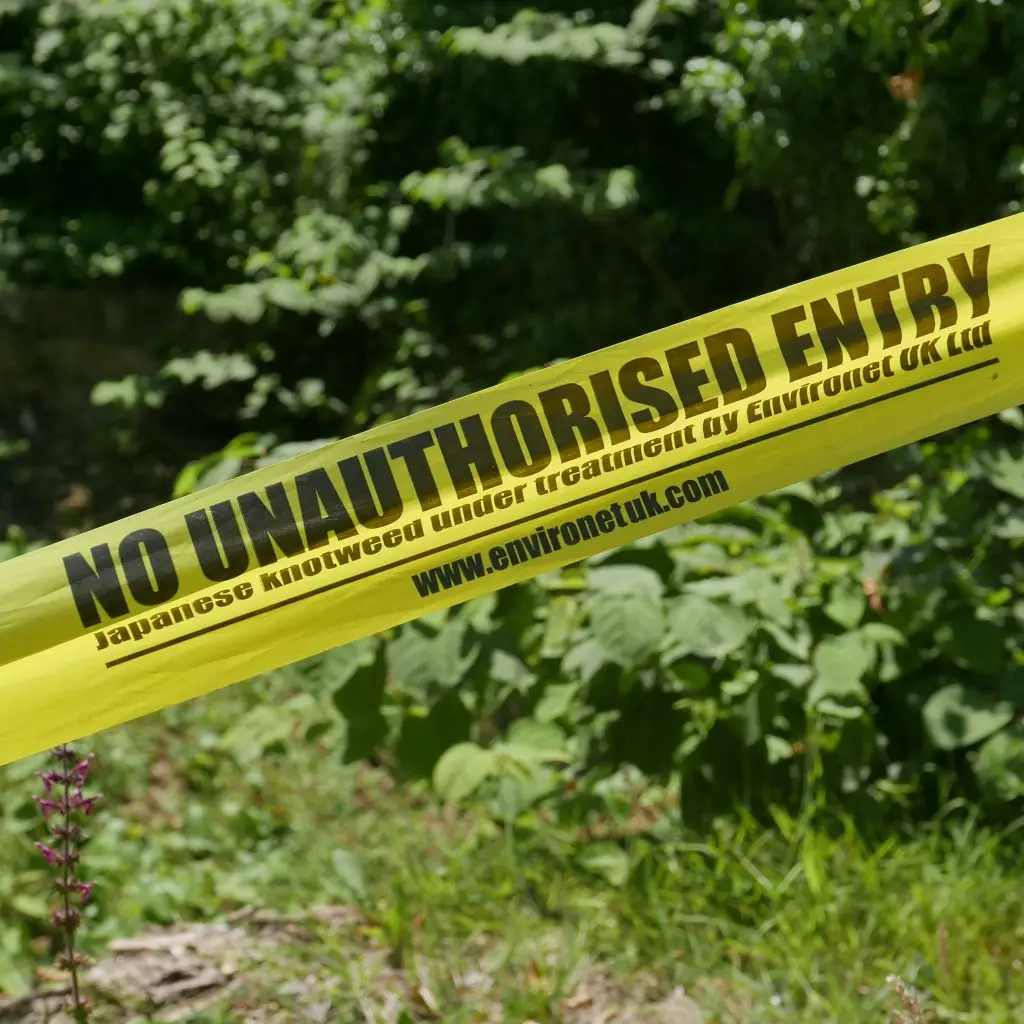
Japanese knotweed on managed estates is best addressed early and formally.
Where reporting is structured, contractors are properly briefed, and documentation is retained, disputes and escalation are significantly reduced.
Where management is informal, risk accumulates quietly until it surfaces during complaint, sale or redevelopment.
Rest assured, where invasive species are identified at an early stage and tackled correctly, problems can usually be avoided. Our specialist consultants complete thorough surveys to identify the extent of the problem. Our plans aren’t one-size-fits-all; they’re customised to tackle the invasive species at your property effectively, taking account of all of your requirements.
Our team of experts is available between 9am and 5:30pm, Monday to Friday to answer your enquiries and advise you on the next steps
Want a survey?
If you already know you have an invasive plant problem, you can request a survey online in less than two minutes by providing a few brief details. A member of the team will swiftly come back to you with further information and our availability.
Need quick plant identification?
Simply upload a few images of your problem plant to our identification form and one of our invasive plant experts will take a look and let you know, free of charge what you are dealing with. We’ll also be there to help with next steps where necessary.