

 Skip to content
 Local councils have a significant role to play in the management, control and enforcement of issues involving Japanese knotweed. While it is not a crime to have knotweed on your land, local authorities are responsible for ensuring that the plant does not cause harm, create a nuisance, or spread into public spaces where it could affect infrastructure, public safety or neighbouring properties.
Understanding how councils operate, the powers they hold and the steps they expect residents to take is essential if you are dealing with knotweed on land you own or manage.

Local authorities are not automatically responsible for removing Japanese knotweed on private land. Their primary concern is whether a landowner is allowing knotweed to cause a problem for others. Councils tend to take action when:
Every council has its own procedures, but most rely on a combination of persuasion, guidance, and when necessary, statutory enforcement.
Councils can use different pieces of legislation to compel a landowner to control Japanese knotweed. The most commonly used is the Anti-social Behaviour, Crime and Policing Act 2014 (ASBCPA).
Through this legislation, councils can issue Community Protection Notices (CPNs) against individuals or organisations who fail to prevent behaviour that has a detrimental effect on the quality of life in the local area.


A CPN may be issued if:
A CPN will outline the actions you must take, such as instructing a professional contractor to treat or remove the knotweed and preventing further spread. Failure to comply can lead to fines and, in some cases, prosecution.
Although rare in knotweed cases, councils can also intervene under the Environmental Protection Act 1990if land is considered contaminated. This approach is typically reserved for severe cases in large-scale developments or public land, rather than domestic properties.


Most councils respond to knotweed-related complaints when a resident reports encroachment or spread from neighbouring land. Once a complaint is made, the council will usually:
Some councils publish their knotweed protocols online, although many handle cases through general environmental nuisance procedures.
What councils expect from homeowners and landowners
Councils expect responsible landownership. If you have knotweed on your property, you are expected to take reasonable and effective steps to prevent it spreading. This includes:
Local authorities prioritise proactive action. You are far less likely to face enforcement if you show that you are taking the problem seriously.
Councils also deal with infestations on their own land. This includes:
In these cases, councils follow internal policies, often using specialist contractors. Infestations close to footpaths, schools, play areas or highways are usually prioritised.


Local authorities also consider Japanese knotweed during planning applications. If you are proposing development, particularly where ground disturbance is involved, councils may require:
Planning approvals may be conditional on having a clear plan in place. Developers who fail to manage knotweed appropriately risk enforcement action and delays to their projects.


Councils expect knotweed to be handled properly because poor DIY attempts can make the problem worse. Herbicides are often ineffective when used incorrectly, while digging without expertise can spread the plant further.
A professional management plan from Environet creates:
We work with homeowners, landlords, developers and councils nationwide to resolve knotweed issues quickly, safely and legally.
We regularly assist clients who are facing pressure from their local council or who have received warnings or CPNs. Our services include:
Taking the right steps early reduces the risk of fines and helps maintain positive relationships with neighbours and the local authority.
Contact Environet UK today if you think you have a Japanese knotweed problem.
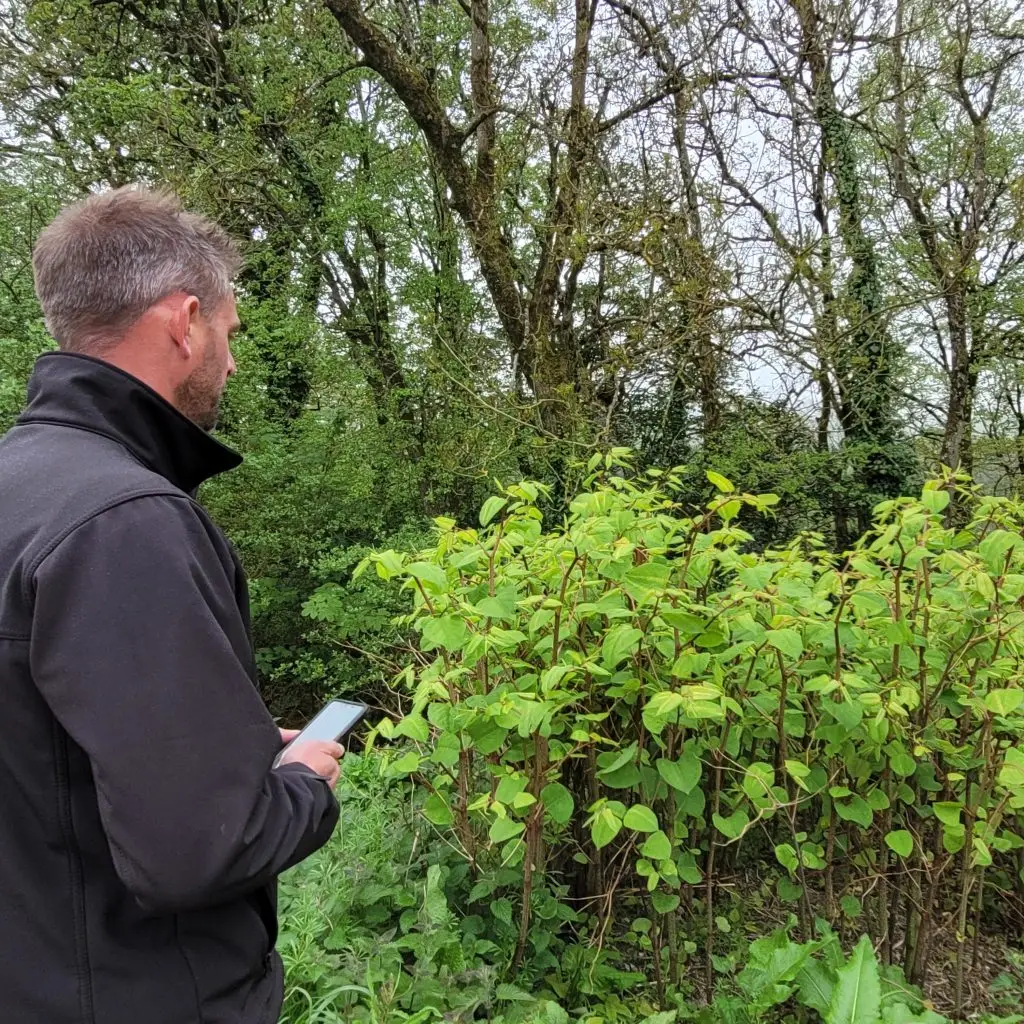

Yes. Summer is when knotweed reaches full height and displays its most recognisable features, making identification straightforward for homeowners and surveyors.
Rest assured, where invasive species are identified at an early stage and tackled correctly, problems can usually be avoided. Our specialist consultants complete thorough surveys to identify the extent of the problem. Our plans aren’t one-size-fits-all; they’re customised to tackle the invasive species at your property effectively, taking account of all of your requirements.
Our team of experts is available between 9am and 5:30pm, Monday to Friday to answer your enquiries and advise you on the next steps
Want a survey?
If you already know you have an invasive plant problem, you can request a survey online in less than two minutes by providing a few brief details. A member of the team will swiftly come back to you with further information and our availability.
Need quick plant identification?
Simply upload a few images of your problem plant to our identification form and one of our invasive plant experts will take a look and let you know, free of charge what you are dealing with. We’ll also be there to help with next steps where necessary.