 Skip to content

Knotweed control with root barriers

Vertical root barriers
Vertical barriers are typically installed along boundaries to prevent knotweed spreading to or from neighbouring land. They are usually installed to a depth of two to three metres, depending on the known depth of the rhizome system.
The installation process involves:
- Excavating a trench with a mechanical excavator
- Positioning the root barrier membrane vertically, as close to the boundary as practical
- Backfilling the trench with suitable fill material
- Taking care throughout to avoid damage to the membrane
Vertical barriers are a practical option where excavation is not feasible along a boundary line or where neighbouring land contains knotweed that cannot be removed.
Quick Links
Horizontal root barriers
Horizontal root barriers are installed to protect specific surfaces where complete rhizome removal is not possible. They are often used beneath:
- roadways
- drives and paths
- car parks
- hardstanding areas
Horizontal membranes prevent upward rhizome growth but may encourage lateral spread. For this reason, a sacrificial zone is usually created at the edge of the membrane so that any emerging shoots can be treated with herbicide.

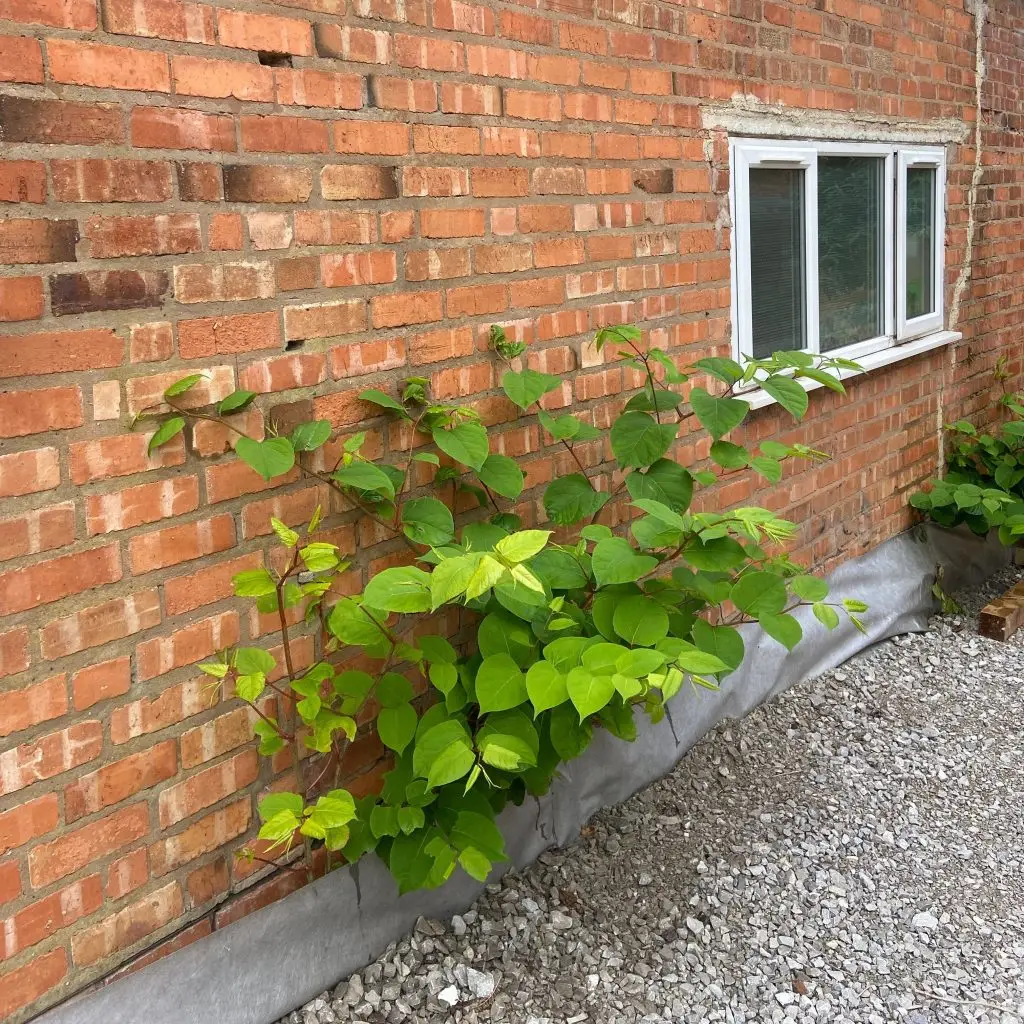
When root barriers are used
Start fixing your invasive plant problem today by requesting a survey
Request a survey
Rest assured, where invasive species are identified at an early stage and tackled correctly, problems can usually be avoided. Our specialist consultants complete thorough surveys to identify the extent of the problem. Our plans aren’t one-size-fits-all; they’re customised to tackle the invasive species at your property effectively, taking account of all of your requirements.
GET IN TOUCH
Contact us
Our team of experts is available between 9am and 5:30pm, Monday to Friday to answer your enquiries and advise you on the next steps
Want a survey?
If you already know you have an invasive plant problem, you can request a survey online in less than two minutes by providing a few brief details. A member of the team will swiftly come back to you with further information and our availability.
Need quick plant identification?
Simply upload a few images of your problem plant to our identification form and one of our invasive plant experts will take a look and let you know, free of charge what you are dealing with. We’ll also be there to help with next steps where necessary.