

...

Japanese knotweed identification in spring

Spring is the most active and visually dramatic stage in the Japanese knotweed lifecycle. As temperatures rise and daylight increases, the plant bursts out of winter dormancy and begins rapid growth.

This makes spring one of the easiest times to identify knotweed because the emerging shoots and young stems have distinctive colours, shapes and textures that few other plants share.
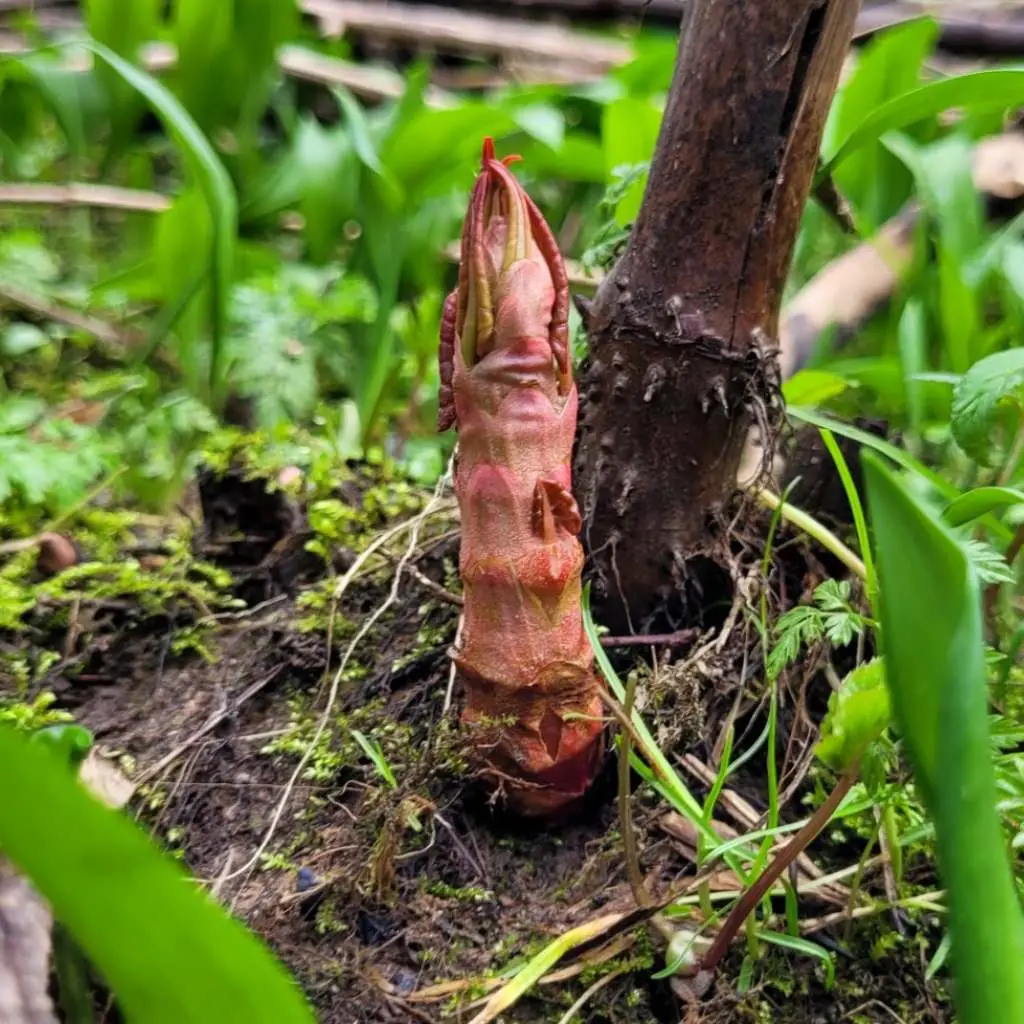
asparagus-like growth of knotweed

How Japanese knotweed emerges in spring

As winter ends, stored energy in the rhizomes triggers new growth. Spring knotweed typically appears:

  • In tight clusters emerging from the crown
  • As individual shoots pushing through soil
  • Along old cane lines
  • At or beyond previous growth boundaries


The plant grows extremely quickly during this season, often several centimetres per day, making early identification especially important.

Quick Links

The appearance of new shoots

New knotweed shoots are the most recognisable spring feature. They look very different from the mature canes seen later in the year.

In early spring, shoots appear as:

  • Red or deep pink spears, around one to three centimetres wide
  • Fleshy, asparagus-like stems with a glossy finish
  • Rolled up leaves at the tip, reddish or purple in colour
  • Tight clusters emerging from the crown


As they grow, the shoots transition from red to green, but often retain a reddish tint around the nodes.

Knotweed shoots in spring
Knotweed unfurling leaves

Leaf development in spring

Japanese knotweed leaves unfold rapidly during spring. Their early appearance provides clear clues:

  • Young leaves are dark red or purple when emerging
  • As they unfurl, they become bright green
  • The early leaves are noticeably shiny and tender
  • Even at this stage, the iconic shield or heart-shaped form is visible


Leaves grow alternately on the stem, creating the familiar zigzag pattern as growth accelerates.

Stem characteristics in early growth

Although the stems are soft and fleshy at first, they quickly begin to form their characteristic structure.

During spring, stems are:

  • Reddish green, often with speckled markings
  • Smooth in texture
  • Hollow inside by the time they reach around 30 to 40 centimetres
  • Marked by distinct nodes where each leaf emerges
  • Slightly zigzagged as the stem bends at each node


By mid spring, the stems resemble young versions of the mature canes seen later in the year.

Knotweed shoots with speckled stems

Growth rate and height during spring

Spring is the fastest stage of knotweed development. Within weeks, the plant can reach impressive height.


  • Typical growth patterns include:
  • Shoots reaching 30 to 60 centimetres within two weeks
  • Plants reaching one to two metres by late spring
  • Dense clustering, giving the appearance of a thicket


This rapid growth helps distinguish knotweed from plants that expand more gradually over the season.

The crown and rhizomes in spring

The crown remains visible at ground level but becomes increasingly obscured as new shoots expand.

In spring, the crown may appear as:

  • A woody, knobbly base from which multiple shoots erupt
  • A dark brown or black structure with old cane remains
  • A source of dense, clustered new growth
  • The rhizomes beneath the crown continue to feed the upward growth. Although usually hidden, disturbed soil may reveal:
  • Thick, woody roots
  • Bright orange colouring when broken
  • Rapid spread horizontally underground


These features help confirm identification when the plant is still small.

knotweed crown and buds

How to distinguish spring knotweed from lookalikes

Several plants can resemble Japanese knotweed in spring, but key differences make accurate identification possible. Bindweed Can have reddish stems early in the season, but bindweed shoots are thin, twining and vine like, not thick or spear shaped. Lilac or dogwood Young shoots may appear reddish but do not emerge in dense clusters or develop hollow stems. Houttuynia This ornamental plant has heart shaped leaves but grows low to the ground and does not form thick, upright shoots. Bamboo Young bamboo shoots are thicker and covered in papery sheaths, and the plants form clumps rather than single crowns. If the plant shows asparagus like red shoots, a zigzag stem pattern and clusters emerging from a woody crown, it is highly likely to be Japanese knotweed.

Why spring is the best time for early detection

Spring offers the clearest signs of new growth, making it ideal for identifying and mapping infestations before they become more established.

  • Spring identification is beneficial because:
  • The red shoots are highly distinctive
  • The crown and growth edges are easy to see
  • Rapid growth reveals new areas of spread
  • Surveys can be performed before the plant reaches full height
  • Early treatment planning is easier and more effective


Spotting knotweed early in spring allows time to act before it matures and thickens.

Samir looking at invasive plant rhizome
Environet Japanese knotweed Management Plan

What to do if you spot knotweed in spring

If the signs match the description above, take action as early in the season as possible. Spring is an ideal time to involve a specialist because treatment options can be planned in line with the plant’s growth cycle.

A professional survey provides:

  • Confirmation of identification
  • Mapping of the infestation
  • Advice on preventing spread
  • Treatment or excavation recommendations
  • Management plans and insurance-backed guarantees


Acting quickly in spring prevents the plant from becoming more established in summer.

If you think you have Japanese knotweed on your property, contact the expert team at Environet to find out how we can help.

Japanese knotweed in spring FAQs

In spring, Japanese knotweed emerges as red or pink asparagus like shoots that grow rapidly. The leaves unfold into bright green, heart shaped forms and the stems develop distinct nodes.
Japanese knotweed grows extremely quickly in spring, often several centimetres per day. By late spring it can reach one to two metres in height.
Early shoots are red or deep pink with a glossy finish. As they grow, they become greener but often retain reddish tinges at the nodes.
Look for thick red shoots emerging in clusters from a woody crown, hollow developing stems and a zigzag leaf pattern. These features distinguish knotweed from bamboo, bindweed and other lookalikes.
Yes. The distinctive new shoots make spring one of the easiest seasons for identification. Early detection allows for more effective surveying and treatment planning.

Start fixing your invasive plant problem today by requesting a survey

Rest assured, where invasive species are identified at an early stage and tackled correctly, problems can usually be avoided. Our specialist consultants complete thorough surveys to identify the extent of the problem. Our plans aren’t one-size-fits-all; they’re customised to tackle the invasive species at your property effectively, taking account of all of your requirements. 

GET IN TOUCH

Our team of experts is available between 9am and 5:30pm, Monday to Friday to answer your enquiries and advise you on the next steps

Want a survey?

If you already know you have an invasive plant problem, you can request a survey online in less than two minutes by providing a few brief details. A member of the team will swiftly come back to you with further information and our availability.

Need quick plant identification?

Simply upload a few images of your problem plant to our identification form and one of our invasive plant experts will take a look and let you know, free of charge what you are dealing with. We’ll also be there to help with next steps where necessary.