

 Skip to content
 Buying a property affected by Japanese knotweed is not uncommon. What matters is not simply whether knotweed is present, but where it is, how it has been managed, and what liabilities transfer with ownership.
We deal with this situation daily for private buyers, developers, housing associations and local authorities. Most problems arise not from the plant itself, but from poor information, incomplete surveys, or unrealistic assumptions made during the transaction.
Handled properly, knotweed does not need to derail a purchase. Handled badly, it can lead to aborted sales, lender refusal, post-completion disputes and expensive remediation under time pressure.
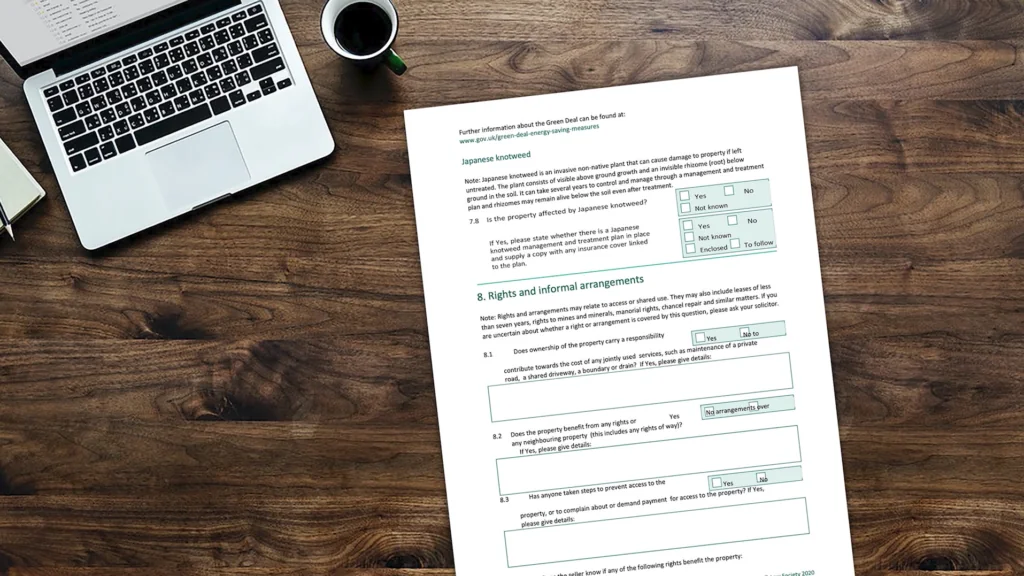
No, but it changes the risk profile of the purchase.
In practice, most lenders and valuers are not concerned by knotweed presence alone. Their concern is unmanaged risk. Where there is a credible management plan, delivered by a specialist contractor and supported by an insurance-backed guarantee, lending is usually achievable.
Transactions fall apart when:
These issues are avoidable with early, informed action.
From a delivery perspective, these are the points most often overlooked during purchases:
Visible growth rarely reflects the true extent of the rhizome system. We regularly see infestations extend well beyond the visible stand, particularly where ground has been disturbed historically.
Properties described as “treated” often have no supporting records, or show signs of incomplete herbicide programmes that have pushed the plant into dormancy rather than control. This can significantly restrict future options.
Knotweed on adjoining land is just as relevant as knotweed within the boundary. Responsibility does not stop at the fence line, and unmanaged encroachment is a common source of post-purchase dispute.
Herbicide-based solutions take years, not months. If buyers intend to extend, landscape or redevelop in the short term, chemical control alone is usually incompatible with their plans.


If knotweed is known or suspected, a specialist invasive species survey should be commissioned before exchange. A proper survey does more than confirm presence. It should:
This forms the basis of a Japanese knotweed management plan and allows costs, timescales and liabilities to be understood before commitment. Survey information should never be treated as a tick-box exercise. This is where transactions usually succeed or fail.
Most UK lenders require:
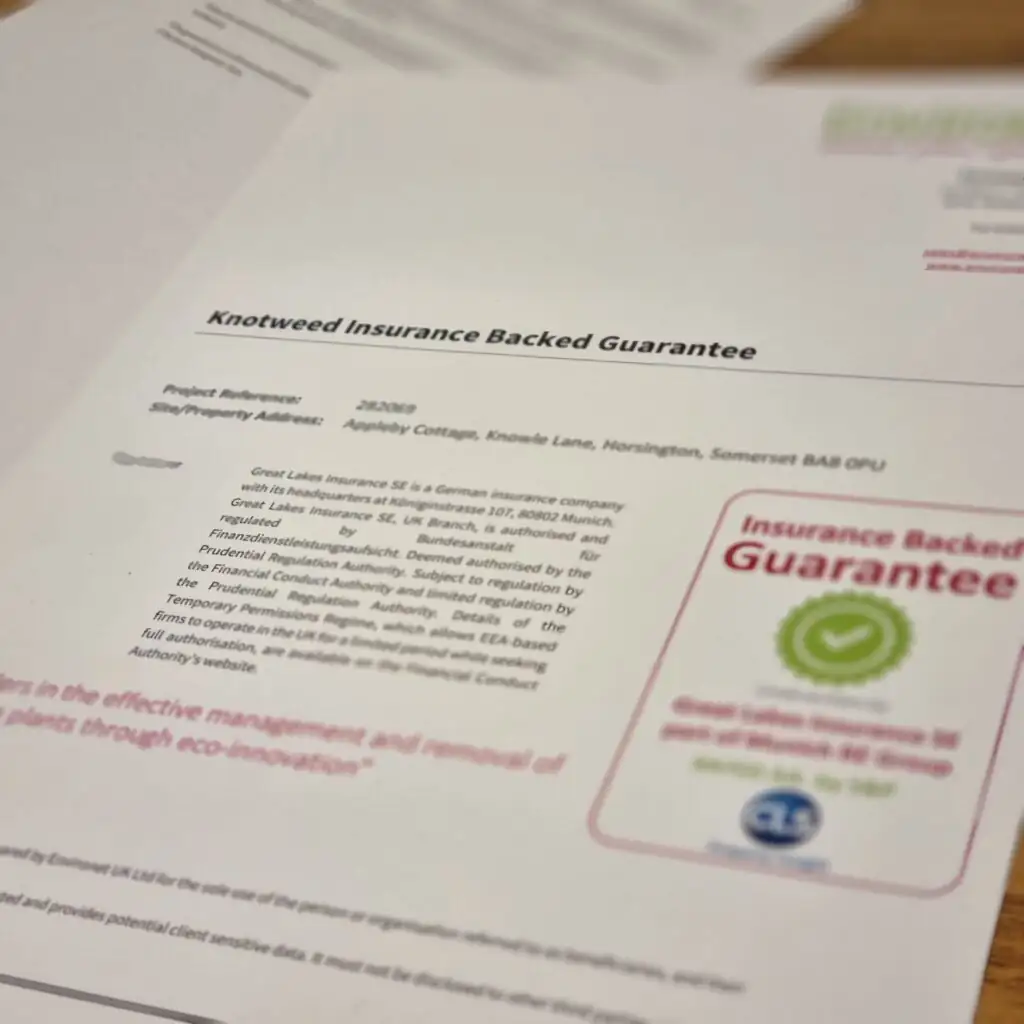
In practice, not all guarantees are equal. Buyers should check:
We regularly see buyers reassured by guarantees that later prove unfit for purpose when development or landscaping is proposed.

The right approach depends on what the buyer intends to do with the property, not just the size of the infestation.
Common options include:
Suitable where ground will not be disturbed and time is available. Typically spans multiple growing seasons and requires ongoing monitoring.
Used where certainty and speed are required, particularly ahead of extensions, redevelopment or sale. More disruptive, but resolves the issue in days rather than years.
In some cases, limited excavation combined with follow-up treatment offers a practical balance between cost, disruption and long-term control.
The mistake buyers often make is choosing the cheapest headline option rather than the option aligned to their future plans.
Where knotweed is identified prior to exchange, it is common for:
What matters is that responsibility is clearly defined. Vague undertakings or reliance on informal assurances almost always lead to conflict later.
Professional input at this stage often saves more money than it costs.

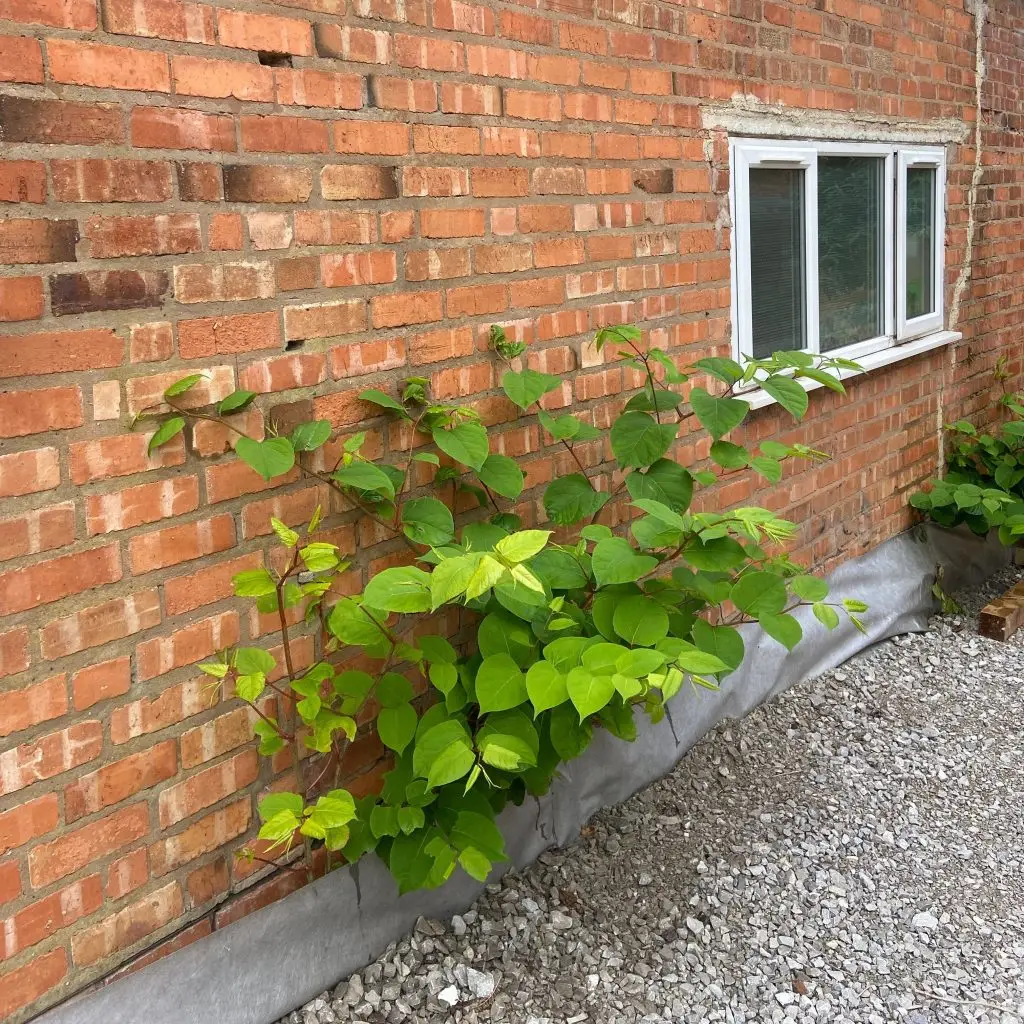
Once you own the property, you are responsible for:
Failure to do so can result in enforcement action, civil claims or difficulties on resale.
Knotweed rarely causes problems on quiet, undisturbed land. Problems arise when groundworks begin without proper controls in place.


If you are buying a property affected by Japanese knotweed, the priority is clarity. Understand the risk, confirm responsibilities, and select a management approach that aligns with how the property will be used.
A properly surveyed site, a realistic plan, and a suitable guarantee are usually enough to allow transactions to proceed without issue.
Rest assured, where invasive species are identified at an early stage and tackled correctly, problems can usually be avoided. Our specialist consultants complete thorough surveys to identify the extent of the problem. Our plans aren’t one-size-fits-all; they’re customised to tackle the invasive species at your property effectively, taking account of all of your requirements.
Our team of experts is available between 9am and 5:30pm, Monday to Friday to answer your enquiries and advise you on the next steps
Want a survey?
If you already know you have an invasive plant problem, you can request a survey online in less than two minutes by providing a few brief details. A member of the team will swiftly come back to you with further information and our availability.
Need quick plant identification?
Simply upload a few images of your problem plant to our identification form and one of our invasive plant experts will take a look and let you know, free of charge what you are dealing with. We’ll also be there to help with next steps where necessary.