Skip to content

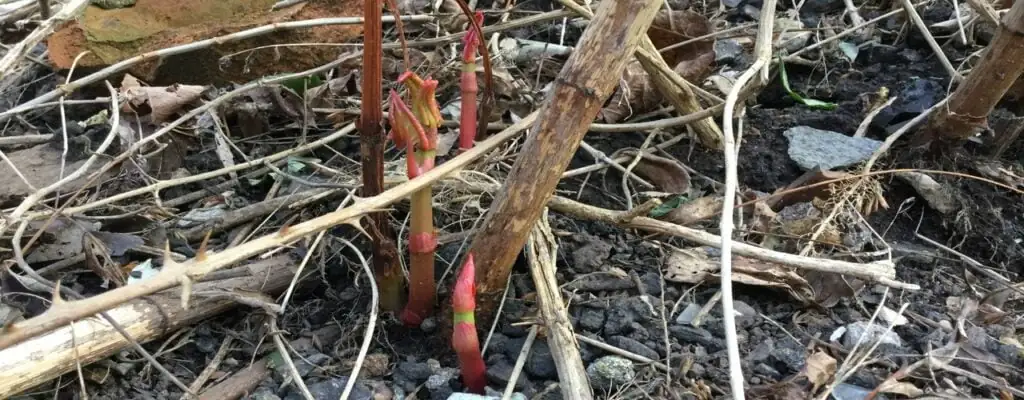
Update: 2026 First Shoots Begin Early Again.
In a super early appearance for the north of England, the first shoots were spotted by Director Mat Day in Long Sutton, Lincolnshire on the 26th February.
The mild and exceptionally wet winter has likely enabled new growth to sprout the minute the sun has come out. Interestingly, there were no corresponding signs of growth further south.
Why spotting Japanese knotweed first shoots is vital
Japanese knotweed’s first shoots are the clearest signal that the UK’s most notorious invasive plant is waking up for another growth season. Those early red, asparagus-like spears don’t just herald spring; they also kick off the period when homeowners, buyers, sellers and lenders start paying close attention.
While Japanese knotweed traditionally emerges in late March or early April once soil warms to around 4°C, our field teams have repeatedly recorded earlier first sightings in recent years, particularly in milder southern regions. Spotting those first shoots promptly matters for three reasons.
- First, identification at the “bud and spear” stage makes it easier to implement swift, effective management before canes rocket to 2–3 metres by early summer.
- Second, mortgage and conveyancing processes often depend on evidence of professional treatment and an insurance-backed guarantee; early action prevents delays and protects property value.
- Third, the legal and neighbourly implications are real: while it isn’t illegal to have knotweed on your land, allowing it to encroach can lead to disputes and claims.
This page brings together our historic “first sighting” updates to help you understand when knotweed has broken dormancy across different years and conditions.
Bookmark and use our seasonal alert page to stay ahead of Japanese knotweed growth, time surveys and treatment, and protect your home from damage and sale complications.
2025: Japanese knotweed first shoots spotted six weeks early
By 15th March 2025, young reddish-purple shoots of Japanese knotweed began to appear in sheltered, warm spots in the UK, pushing ahead of what is considered the normal spring emergence window.
The particularly mild winter and early spring of 2025 accelerated growth: warm soils, combined with moisture, created ideal conditions. Experts noted that the plant is creeping into its season earlier each year, likely influenced by climatic shifts.
The first shoots were spotted in Plymouth, in an old familiar spot to our Director Emily Grant. The proximity to the watercourse keeping the soil temperatures up and allowing new growth to appear.
2024: Japanese knotweed first shoots spotted six weeks early
The 2024 season brought yet another early awakening for Japanese knotweed, confirming a continuing trend towards earlier emergence across the UK.
The first shoots of Japanese knotweed were recorded in Stockport, Greater Manchester, on 20 February 2024, growing along the banks of the River Goyt. Similar sightings soon followed in southern England, with early red stems appearing in parts of Devon and London before the end of the month.
This year’s early growth has been widely attributed to the UK’s unusually mild winter and wet February, which left soils consistently above the 4°C threshold that triggers knotweed’s growth cycle.
According to reports, Japanese knotweed appeared around six weeks earlier than average, echoing warnings from ecologists and property professionals that the climate crisis is accelerating seasonal behaviour in invasive species.
2023: Knotweed emerges in London (February)
The 2023 growing season was kicked off in Early February 2023 with a sighting in London. Yet another year where early growth spurred on by warmer, wetter winters has emerged.
The continuing pattern of early emergence spells trouble for our native ecology, as knotweed steals a march for light, space and nutrients.
2022 – First shoots in Plymouth, Devon (February)
The first Japanese knotweed shoots of 2022 were confirmed on the banks of the River Plym in Plymouth, Devon – more than a fortnight earlier than the previous year’s benchmark.
As in other recent seasons, ground temperatures of roughly 4°C appear to have triggered emergence in late winter rather than early spring. This aligns with broader observations that many UK plants are now advancing seasonal milestones; knotweed is no exception.
Expect the familiar progression: red or purple spear-like shoots rapidly becoming green, bamboo-like stems and reaching around 3 metres by June, followed by creamy-white flowers late summer.
2021 – First UK Shoot appear in Devon (March)
We’ve been keeping a lookout for the first Japanese knotweed shoots of the season and we can confirm they’ve been spotted by our eagle-eyed Regional Director, Emily, on the banks of the River Plym in Plymouth, Devon.
The Riverside location means that ground temperatures do not dip so low, and enable new growth earlier in the year than you might anticipate in drier areas.
2020 – Earliest ever: Kensington, West London (January)
In an extraordinary start to the decade, we recorded Japanese knotweed first shoots in January – spotted behind garages in Kensington, sheltered between two walls in a pronounced urban microclimate.
January emergence is highly unusual; typically we wouldn’t expect fresh growth until March. The likely drivers were a mild winter with minimal frost and relatively warm, rain-softened soils.
While this didn’t mean a nationwide January flush, it underlined how localised warmth and protection can coax knotweed out of dormancy weeks ahead of schedule.
2019 – Warmest February on record drives a February emergence (Lee Bay, North Devon)
After the warmest February on record, first shoots appeared at least a month earlier than usual in Lee Bay, North Devon. With peak air temperatures reaching 20.6°C in West Wales, soils surpassed the ~4°C threshold and the plant began its annual “assault” on patios, drives, cavity walls and drains sooner than expected.
The message from 2019 still holds: Japanese knotweed first shoots in February are no longer unthinkable. Early growth requires early action—whether that’s booking a survey, using our free identification service, or opting for our environmentally friendly Resi-Dig-Out™ approach.
2018 – Coldest February in 5 years delays knotweed emergence
The ‘Beast from the East’ brought the coldest February week in five years last month and the Met Office is forecasting lower-than normal temperatures for the rest of March.
First shoots were observed at the end of March in London.
2017 – Red shoots across the UK (spring)
By spring 2017 we were seeing red shoots across multiple regions, reminding homeowners what to look for as the season gets underway: fast-growing, hollow canes that soon display red flecking; green, heart-shaped leaves; and a characteristic zig-zag pattern along the stems.
2016 – “Awake again”: a mild, wet winter and widespread early buds (March, South East typical)
Reports in 2016 pointed to widespread early growth – unsurprising after a mild, wet winter. While March sightings are fairly typical in the South East, the notable element was how ready the plant was to accelerate once temperatures rose.
We highlighted the scale of the UK problem: a meaningful share of homes are impacted directly or at risk of encroachment, and seasonal Google searches spike as soon as growth becomes visible.
2015 – “The dreadful buds of March” (London and South West first)
In 2015, our London and South West teams logged March first shoots – slightly early for the wider UK but consistent with the warmer microclimates often found in those regions. That season, we warned about common spread pathways: disturbance and movement of knotweed-infested soil, and contaminated green waste entering compost streams.
We also noted a rising tide of cases where herbicide treatments by non-specialists had failed, adding weight to concerns about dormancy and regrowth. The take-home from 2015 applies just as much today: those “dreadful buds of March” become dense thickets by June unless you intervene. Don’t ignore the first shoots—seek expert help to remove or manage the infestation properly.
What this timeline tells us
Looking across these years, three themes emerge.
- First, the calendar is shifting. Although late March and early April remain typical for many areas, Japanese knotweed first shoots are increasingly being recorded in February—and in extreme microclimates, even January. Keep a close eye from late winter onwards, especially in the South West and urban heat islands.
- Second, microclimate matters. Walls, south-facing aspects and sheltered corners can push soil temperatures above the emergence threshold weeks early, creating hyper-local first sightings that won’t yet be mirrored nationwide.
- Third, early identification unlocks smoother outcomes. Whether you’re selling, buying or staying put, quick confirmation followed by a recognised, insurance-backed treatment plan protects value, prevents spread and satisfies lenders and conveyancers.
What to do when you see Japanese knotweed’s first shoots
If you think you’ve seen those first shoots -red/purple spear tips that rapidly become hollow, bamboo-like canes – don’t cut, strim or dig.
Disturbance spreads rhizome fragments and makes the problem worse. Instead, take clear photos and use our free identification service, or add a sighting to our Exposed heatmap to support nationwide monitoring.
If confirmed, we’ll advise on the best course of action for your site, from survey to treatment and guarantees that keep lenders onside. With vigilance from late winter and decisive action at the first sign of growth, you can stay ahead of Japanese knotweed and minimise the impact on your home.
If you think you may have Japanese knotweed on your property, don’t wait for it to spread – contact Environet today. Our expert team can identify, assess, and remove knotweed safely and effectively. Call us or request a free survey now for fast, professional advice.