Skip to content

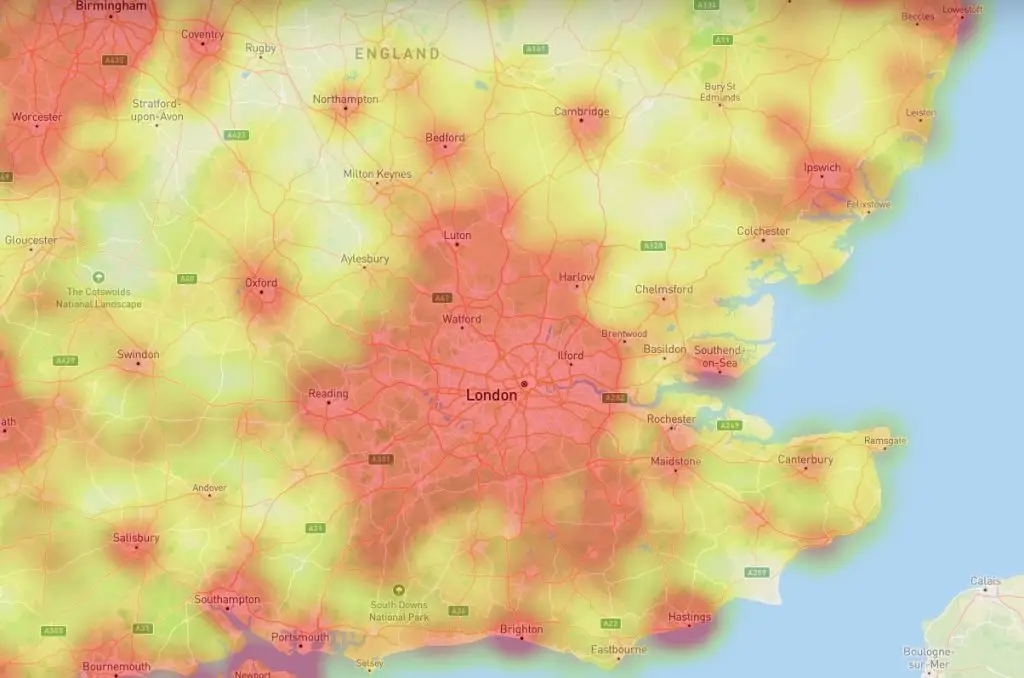
Japanese knotweed is well established across much of the UK, and awareness of its spread is essential for homeowners, buyers, and professionals in the property industry. To help identify local risk areas, we publish annual hotspot rankings based on data from Exposed™: The Japanese Knotweed Heatmap – our live, postcode-searchable map populated with tens of thousands of verified sightings. Updated year-round by our experts and members of the public, Exposed™ provides the most comprehensive picture of Japanese knotweed across the country.
Simply enter your postcode into the heatmap to see whether Japanese knotweed has been reported nearby. The map highlights areas of known infestation in yellow, orange, and red, depending on the intensity of reports.
This page brings together annual hotspot data for easy comparison and will be updated each year with the latest findings from Exposed™.
How to use this page
- Live View: Use Exposed™ for the most up-to-date information on infestations in your area.
- Annual Snapshots: Compare the spread of Japanese knotweed across different years using the lists below.
- Methodology Note: From 2021 to 2023, the rankings were compiled by counting the number of infestations within a 4km radius of each town or city. From 2024 onwards, the data is presented by county or unitary authority area, showing the number of infestations per square kilometre (with total infestations also listed) to provide a more accurate measure of intensity. In 2025, we changed from Km to miles.
2026 – Hotspots (incidences per mile²)
A brand new heatmap was launched and even more refinement of the way the data was analysed.
| Rank | County/Region | Total Incidences | Incidences per mi² |
|---|---|---|---|
| 1 | Bristol | 1,342 | 32.29 |
| 2 | Merseyside | 3,393 | 13.45 |
| 3 | Greater London | 4,704 | 7.67 |
| 4 | Greater Manchester | 3,688 | 7.49 |
| 5 | Lancashire | 8795 | 7.00 |
| 6 | Isle of Man | 1002 | 4.53 |
| 7 | Channel Islands | 301 | 3.94 |
| 8 | Isle of Wight | 554 | 3.78 |
| 9 | Derbyshire | 3,496 | 3.44 |
| 10 | South Yorkshire | 1,701 | 2.84 |
2025 – England Hotspots (incidences per mile²)
- Bristol – 33.91 per mile² (1,440 total)
- Merseyside – 11. 87 per mile² (2,963 total)
- Greater London – 7.74 per mile² (4,687 total)
- Lancashire – 7.25 per mile² (8,612 total)
- Greater Manchester – 7.22 per mile² (3,558 total)
- Isle of Man – 4.45 per mile² (982 total)
- Channel Islands – 3.94 per mile² (301 total)
- Isle of Wight – 3.77 per mile² (554 total)
- Derbyshire – 3.38 per mile² (3427 total)
- Nottinghamshire – 2.55 per mile² (2,091 total)
In 2025, Environet included new data sets into the map, enhancing the picture of knotweed infestations across the country. Thousands of previously unrecorded entries were added to the map, making it the most comprehensive picture of knotweed in the UK to date.
2024 – England Hotspots (incidences per km²)
- Bristol – 5.18 per km² (710 total)
- Merseyside – 2.49 per km² (1,611 total)
- Greater London – 2.29 per km² (3,592 total)
- Greater Manchester – 2.23 per km² (2,846 total)
- Lancashire – 1.48 per km² (4,556 total)
- Channel Islands – 1.42 per km² (281 total)
- Derbyshire – 1.01 per km² (2,651 total)
- West Midlands – 1.01 per km² (908 total)
- South Yorkshire – 0.91 per km² (1,417 total)
- Isle of Wight – 0.85 per km² (325 total)
In 2024, Environet introduced a new way of presenting the data—by population and land area—to show where knotweed density is most severe, offering a more balanced view across regions.
2023 – UK Hotspots (infestations within 4km radius)
- Swansea, South Wales – 1,350 infestations
- Bolton, Greater Manchester – 1,010
- Bristol – 986
- Cardiff, South Wales – 872
- Preston, Lancashire – 857
- Nottingham – 803
- Derby – 711
- Caernarfon, Gwynedd (North Wales) – 708
- Llanelli, Carmarthenshire (South Wales) – 706
- Bridgend, South Wales – 664
The 2023 data highlighted that South Wales remained the most affected region overall, with Swansea topping the list for the first time.
2022 – UK Hotspots (infestations within 4km radius)
- Bolton, Greater Manchester – 684 infestations
- Bristol – 475
- St Helens, Merseyside – 441
- Blackburn, Lancashire – 407
- Capel Garmon, Snowdonia – 398
- Llanelli, South Wales – 389
- Cardiff, Wales – 361
- Rotherham, Yorkshire – 306
- Streatham, South West London – 300
- Nottingham and Sheffield – 225 each
In 2022, Bolton topped the national table for the second consecutive year, with several northern towns and Welsh locations continuing to feature prominently.
2021 – UK Hotspots (infestations within 4km radius)
- Bolton, Greater Manchester – 621 infestations
- Bristol – 465
- St Helens, Merseyside – 440
- Cardiff, Wales – 419
- Blackburn, Lancashire – 406
- Llanelli, Wales – 382
- Swansea, South Wales – 330
- Rotherham, Yorkshire – 320
- Shepherd’s Bush, West London – 230
- Nottingham – 228
These figures, taken from the first major release of Environet’s Exposed™ Heatmap data, marked the beginning of our now annual reporting on knotweed hotspots.
What to do if you think you have Japanese knotweed
If you find a plant that you suspect might be Japanese knotweed, here’s what to do:
- Identify the Plant: Visit our identification guide or use our free ID service by emailing a photo to expert@environetuk.com.
- Commission a Survey: If knotweed is confirmed, a professional survey will assess the extent of the infestation, its likely origin, and the most effective treatment approach.
- Arrange Professional Treatment: Treatment usually involves herbicide application or excavation. Always ensure work is backed by an insurance-backed guarantee.
- Buying or Selling a Property: If you’re purchasing a property near a hotspot or want reassurance before a sale, consider arranging a detection dog survey.
Stay informed
You can view live data, report a new sighting, or upload photos for verification at any time via Exposed™: The Japanese Knotweed Heatmap. The map is continually updated, helping property owners and buyers stay informed about the latest developments in their local area.
Need help removing Japanese knotweed?
If you’ve discovered Japanese knotweed on your property, don’t wait for it to spread. Our team of experts can identify, survey and professionally remove infestations using proven methods backed by an insurance-backed guarantee. Contact Environet today for fast, effective knotweed removal and peace of mind.
Frequently Asked Questions
1. What is Japanese knotweed and why is it a problem?
Japanese knotweed (Reynoutria japonica) is an invasive plant introduced to the UK in the 19th century. It grows rapidly through concrete, tarmac and foundations, causing structural damage and reducing property value. Its dense roots, or rhizomes, can remain dormant underground for years and regrow when disturbed, making professional control essential.
2. How do I check if Japanese knotweed is in my area?
You can check your local area using Exposed™: The Japanese Knotweed Heatmap, Environet’s live online tracker. Simply enter your postcode to see confirmed sightings nearby, with hotspots colour-coded by intensity. The heatmap is updated throughout the year with verified data from our specialists and the public.
3. What should I do if I think I’ve found Japanese knotweed?
If you spot a suspicious plant, take a clear photo and email it to expert@environetuk.com for free identification. If confirmed, our team can carry out a professional survey to assess the extent of the infestation and recommend the most effective treatment plan.
4. Can I remove Japanese knotweed myself?
DIY removal is not recommended. Knotweed is extremely persistent, and incorrect handling can cause it to spread further, even from a tiny fragment of root. Professional treatment, whether by herbicide or excavation, should always be carried out by a qualified specialist and supported by an insurance-backed guarantee.
5. How can I prevent Japanese knotweed from affecting a property purchase or sale?
If you’re buying or selling a property, especially in or near a hotspot area, arrange a knotweed survey for reassurance. Environet provides official survey reports that can be used in property transactions to satisfy mortgage lenders and protect both buyers and sellers.